Run EV charging alongside the tariffs you already manage
For utilities launching EV charging — bringing charging sessions, tariff structures, load visibility and the customer experience together in one platform

Built for utilities entering EV charging
For electricity distribution companies, retail utilities and energy businesses launching or expanding EV charging services
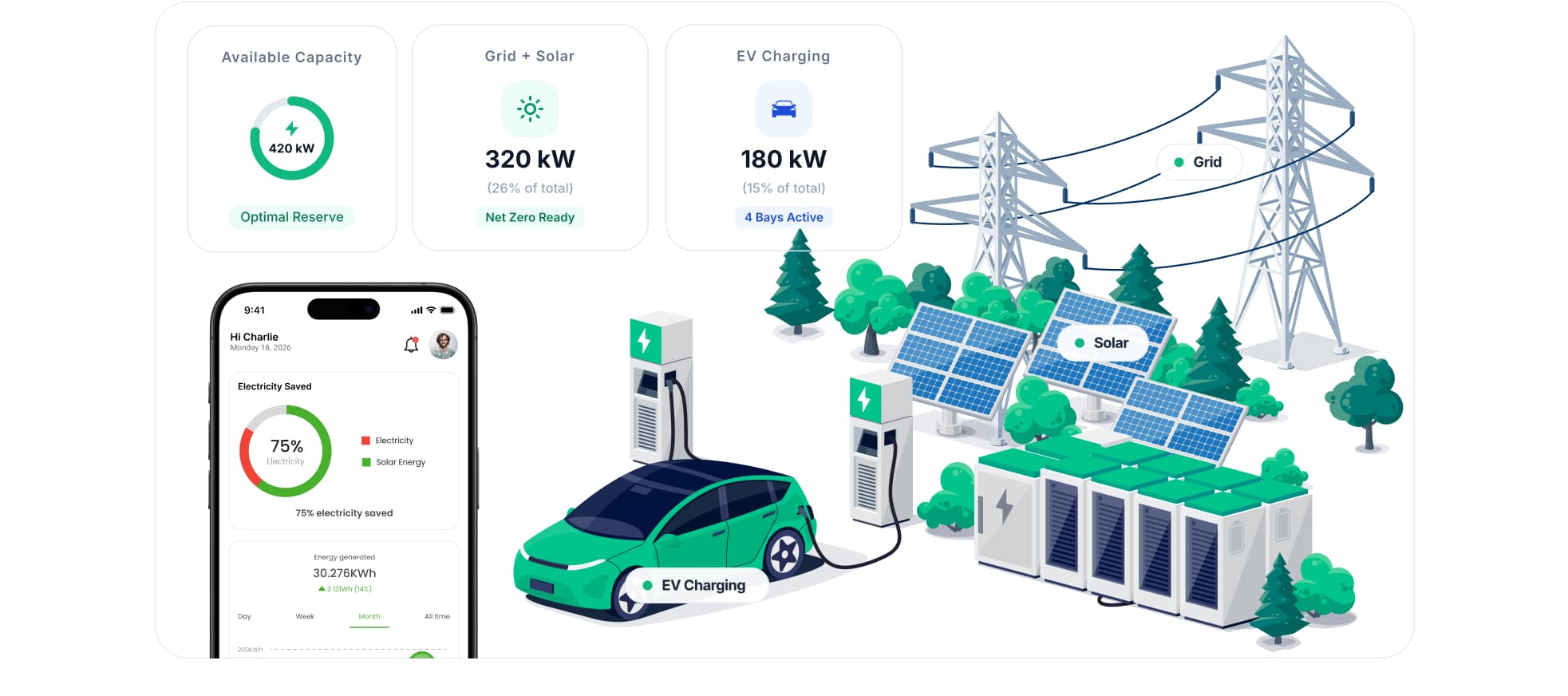
Charging demand does not follow a simple tariff calendar
EV charging can create new demand patterns across the network. Your charging platform needs to understand the relationship between sessions, tariffs and available capacity

Tariffs
How should charging prices reflect the tariff structure?

Load
Where and when is charging creating additional demand?

Charging
Which chargers and sessions are active across the network?

Customer
How do customers access charging through your own utility brand?
Put your tariffs, charging and load in one view
Connect charging sessions with your configured tariff structure and operational load information while giving customers a charging experience under your brand
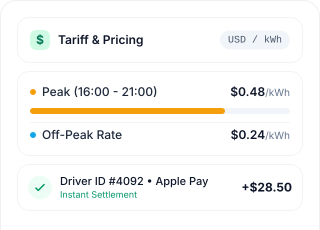
Tariff-Aware Charging
Configure charging tariffs and pricing rules around your utility business model and applicable charging services
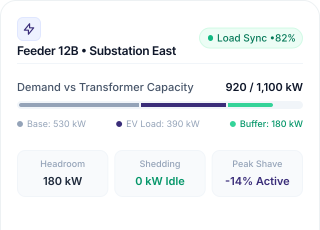
Load Visibility
See charging demand alongside charging sessions to understand where EV charging is adding load
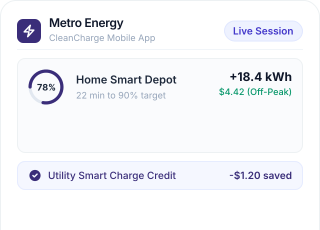
Utility-Branded Experience
Give customers a branded app and charging experience connected to your charging network
OCPP 1.6J and 2.0.1. Compatible charging infrastructure. Typical CSMS launch in 1–3 weeks, depending on integrations and scope
Keep the compatible OCPP chargers you specify
Build your charging network around compatible hardware while using Gaadin AI as the software layer for charging management and customer experience
Book an iCharz DemoOCPP 1.6J and 2.0.1
Connect compatible charging infrastructure using supported OCPP versions
Your infrastructure strategy
Use compatible chargers that fit your utility deployment and site requirements
Your customer relationship
Deliver the charging experience under your own utility brand
Your tariff model
Configure supported charging tariffs and pricing workflows around your commercial model
Typical launch
A typical CSMS launch can be around 2–4 weeks, depending on charger integrations, branding, tariff configuration, payments and deployment scope
Add EV charging to your utility platform
Utility EV charging — FAQs
Answers about charging management, tariffs, OCPP infrastructure, load visibility and utility-branded EV charging
Yes. Gaadin AI provides the charging-management software layer and can support a branded charging experience for utilities launching or expanding EV charging services.
Gaadin AI can support configurable charging tariffs and pricing workflows. The exact implementation depends on the utility's tariff model, pricing rules and required integrations.
Yes. Gaadin AI supports a white-label driver/customer experience that can be configured around the utility's brand.
Yes. Compatible chargers from different manufacturers can be connected through supported OCPP versions and functionality.
Yes. Gaadin AI supports compatible OCPP 1.6J and OCPP 2.0.1 charging infrastructure.
Yes. Gaadin AI can provide visibility into charging sessions and available charging/energy data, helping operators understand charging activity across the network.
Gaadin AI includes energy-management capabilities that can support charging optimisation based on available energy, charging and operational data. Specific utility/grid integrations depend on the deployment.
A typical CSMS launch can be targeted for approximately 2–4 weeks, depending on charger integrations, branding, tariff configuration, payment requirements and other deployment needs.