Keep the chargers. Move the software
Your charging hardware stays. Your brand stays. Move away from a hardware-tied software platform and manage your network through a flexible, white-label CSMS
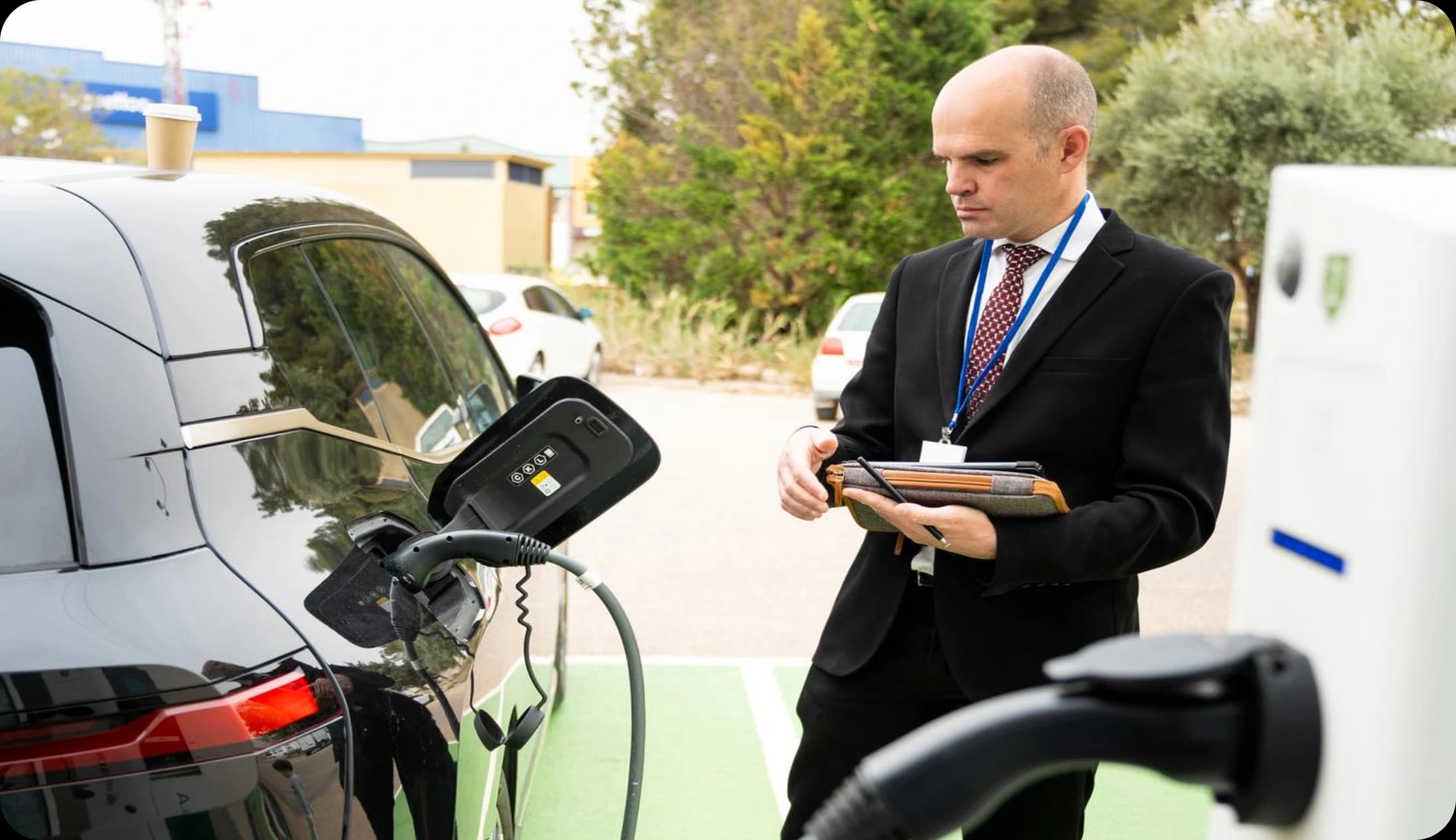
Built for operators who already have a network
For CPOs, energy companies, property operators and mobility businesses with chargers already deployed but looking for a more flexible charging management platform
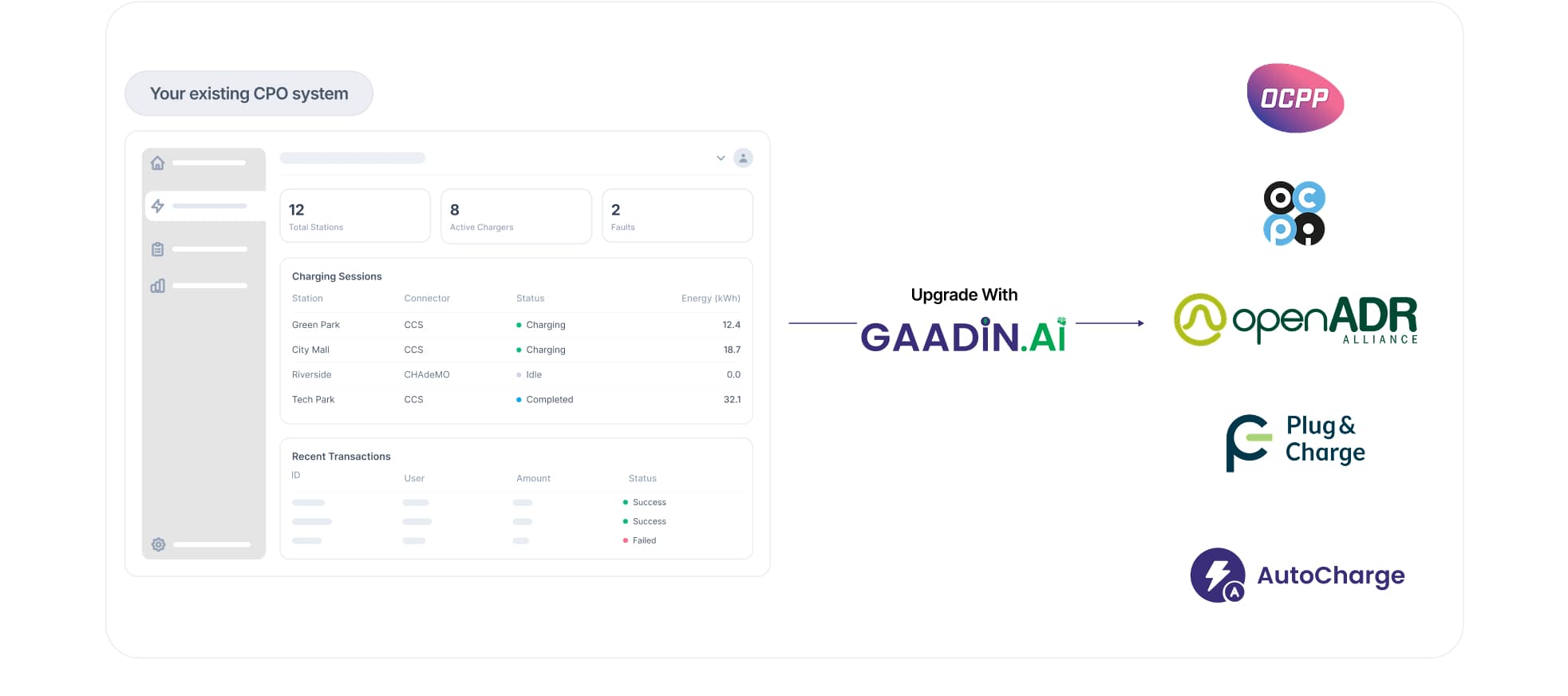
A second hardware brand means a second portal
Your network grows. Your software becomes fragmented. Your drivers end up dealing with someone else's charging experience

Hardware
Different charger manufacturers bring different software environments

Operations
Teams switch between multiple portals to monitor the network

Customer
The hardware vendor's app can become the driver's charging experience

Growth
Adding sites and charger brands can add another layer of operational complexity
One CSMS across compatible OCPP hardware
Bring compatible chargers from different manufacturers into one charging management platform — with your brand across the customer and operator experience
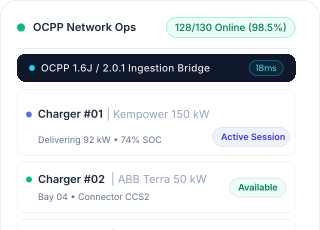
One CSMS
Manage compatible chargers, connectors, sessions and network operations from one platform
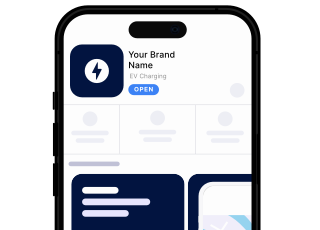
Your brand
Put your brand on the driver experience and operator interface instead of relying on individual hardware-vendor apps
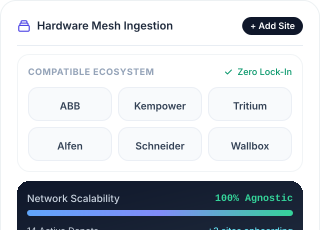
Scale Your Network
Add compatible chargers and sites without creating a separate software environment for every hardware manufacturer
Keep the compatible OCPP chargers
Move the software without replacing compatible charging hardware already deployed across your network
Book an iCharz DemoOCPP 1.6J & 2.0.1
Connect compatible chargers using supported OCPP versions
Multi-vendor network
Manage compatible chargers from different manufacturers through one CSMS
Existing sites
Continue operating your deployed charging locations while changing the software layer
Your customer experience
Move the charging experience under your own brand instead of remaining dependent on a hardware manufacturer's application
Typical migration
A typical CSMS migration or launch can be around 2–4 weeks, depending on charger models, integrations, data migration, configuration and deployment scope
Keep your chargers Take control of the software
Existing charging network — FAQs
Answers about CSMS migration, OCPP chargers, multi-vendor networks, white-label branding and existing charging infrastructure
No, not necessarily. Gaadin AI can connect compatible existing chargers that support the required OCPP versions and functionality.
Yes. Compatible chargers from different manufacturers can be managed through the same CSMS, provided they support the required OCPP functionality.
Yes. Where the existing chargers support the required OCPP functionality, Gaadin AI can provide an alternative CSMS layer for network management.
Yes. Gaadin AI supports a white-label charging experience, allowing the CPO to present its own brand across supported customer and operator workflows.
Yes. Compatible chargers, connectors, sessions and network operations can be managed through one Gaadin AI CSMS.
Yes, provided the new chargers are compatible with the supported OCPP versions and required functionality.
Migration requirements depend on the existing platform, available data and the required scope. This can be assessed during the implementation process.
A typical migration or launch can be targeted for approximately 2–4 weeks, depending on charger models, integrations, configuration, data migration and deployment requirements.