Know how every leased EV is being used
For leasing companies and captive finance fleets — bringing vehicle utilisation, charging, energy and battery health together across every leased vehicle and contract

Built for leasing operators
For EV leasing companies, captive finance fleets and businesses managing vehicles across multiple customer contracts
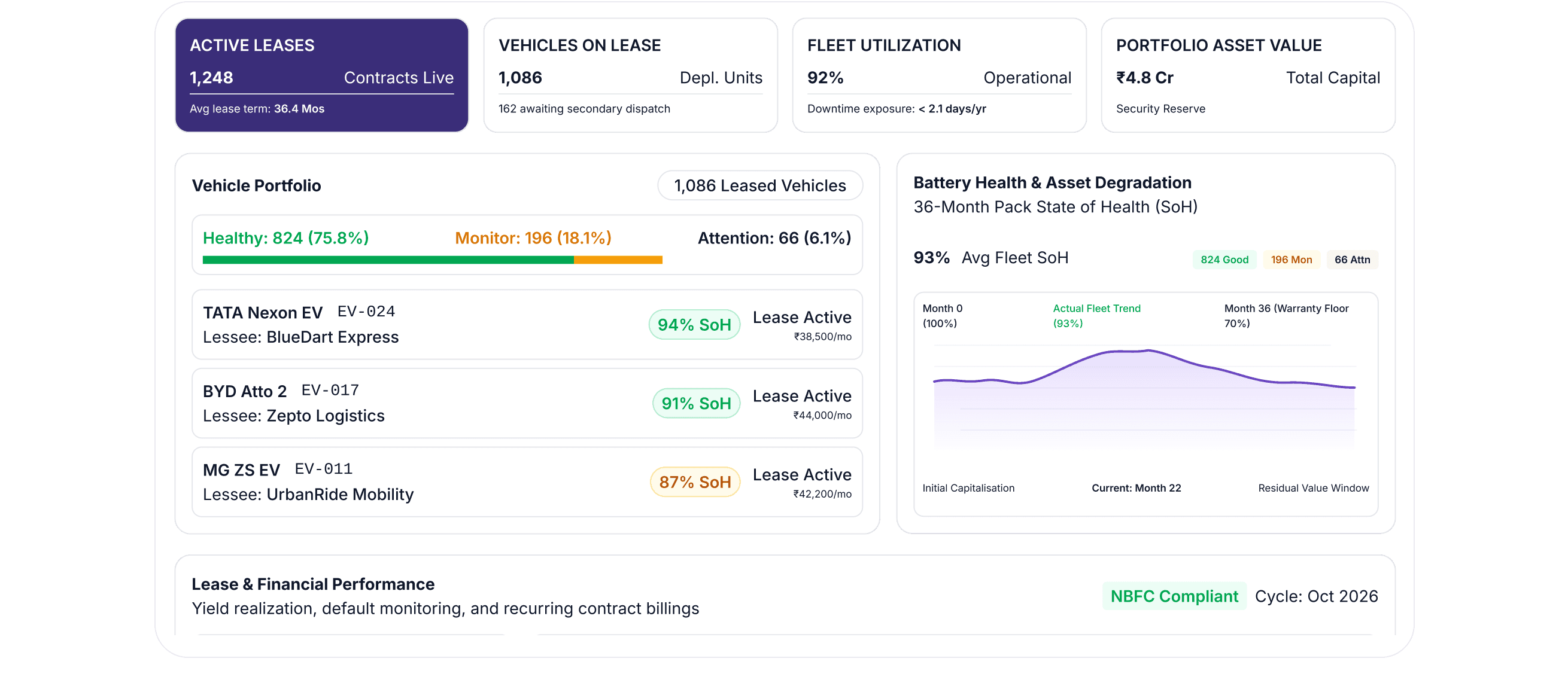
You know the contract. You don't always know the asset
A leased vehicle can accumulate high utilisation, inefficient charging patterns or battery degradation without those signals reaching the asset's team in time

Utilisation
How heavily is each leased vehicle being used?

Charging
How is the vehicle being charged throughout the contract?

Battery
How is battery health changing over time?

Contract
What is the condition of the asset as the lease approaches its next milestone?
See utilisation, charging and battery health together
Bring each leased vehicle, its operational activity and battery intelligence into one view — and manage customers or contracts as separate sub-fleets
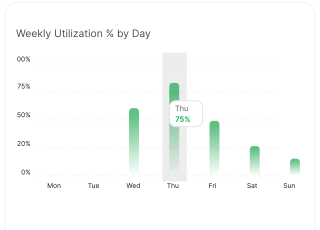
Asset Utilisation
See how vehicles are being used across customers, contracts and sub-fleets
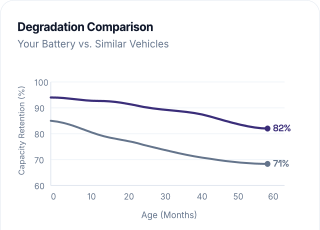
Battery AI
Track battery health and identify changes in battery performance over time
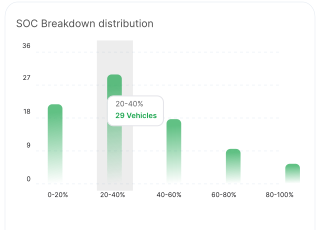
Charging Intelligence
Understand charging activity and patterns across leased vehicles
Keep your contracts and telematics. Add EV intelligence
Connect supported telematics and existing OCPP charging infrastructure without replacing the systems already used to manage your leased vehicles
Book an iCharz DemoExisting telematics
Use available vehicle, location and utilisation data from supported telematics systems
Existing chargers
Support for compatible OCPP 1.6J and OCPP 2.0.1 charging infrastructure
Customer sub-fleets
Separate vehicles by customer, contract or operating group while managing them from the same platform
Battery intelligence
Add battery health visibility to the operational data already available from your vehicles
Typical deployment
A typical deployment can be around three weeks, depending on integrations, configuration and deployment scope
See every leased EV, from contract to battery health
EV leasing fleet operations — FAQs
Answers about utilisation, charging, battery health, customer sub-fleets and leased EV operations
Yes. Gaadin AI can use available vehicle and telematics data to provide visibility into vehicle activity and utilisation across supported fleets and sub-fleets.
Yes. Vehicles can be organised into sub-fleets and operational groups, allowing leasing operators to separate customers, contracts or other fleet structures while maintaining central visibility.
Yes. Gaadin AI includes Battery AI capabilities designed to provide battery-health intelligence from available vehicle and charging data.
Yes. Compatible charging infrastructure can be connected to provide visibility into charging sessions and charging activity across leased vehicles.
Yes. Gaadin AI is designed to work with supported telematics and compatible OCPP 1.6J and OCPP 2.0.1 charging infrastructure.
Yes. Leasing operators can organise vehicles into customers, contracts, sub-fleets and locations while maintaining a central operational view.
Gaadin AI can provide visibility into vehicle utilisation, charging activity and battery health, giving leasing teams relevant operational data as vehicles approach contract milestones.
A typical deployment can take approximately three weeks, depending on fleet size, telematics and charger integrations, configuration and deployment requirements.