One driver app across the networks you allow
Give drivers one branded charging experience to discover, access and pay across the charging networks available through your roaming partnerships

Built for eMSPs and mobility brands
For mobility companies, automotive brands, fleet businesses and other organisations that want to give customers access to multiple charging networks through one branded experience
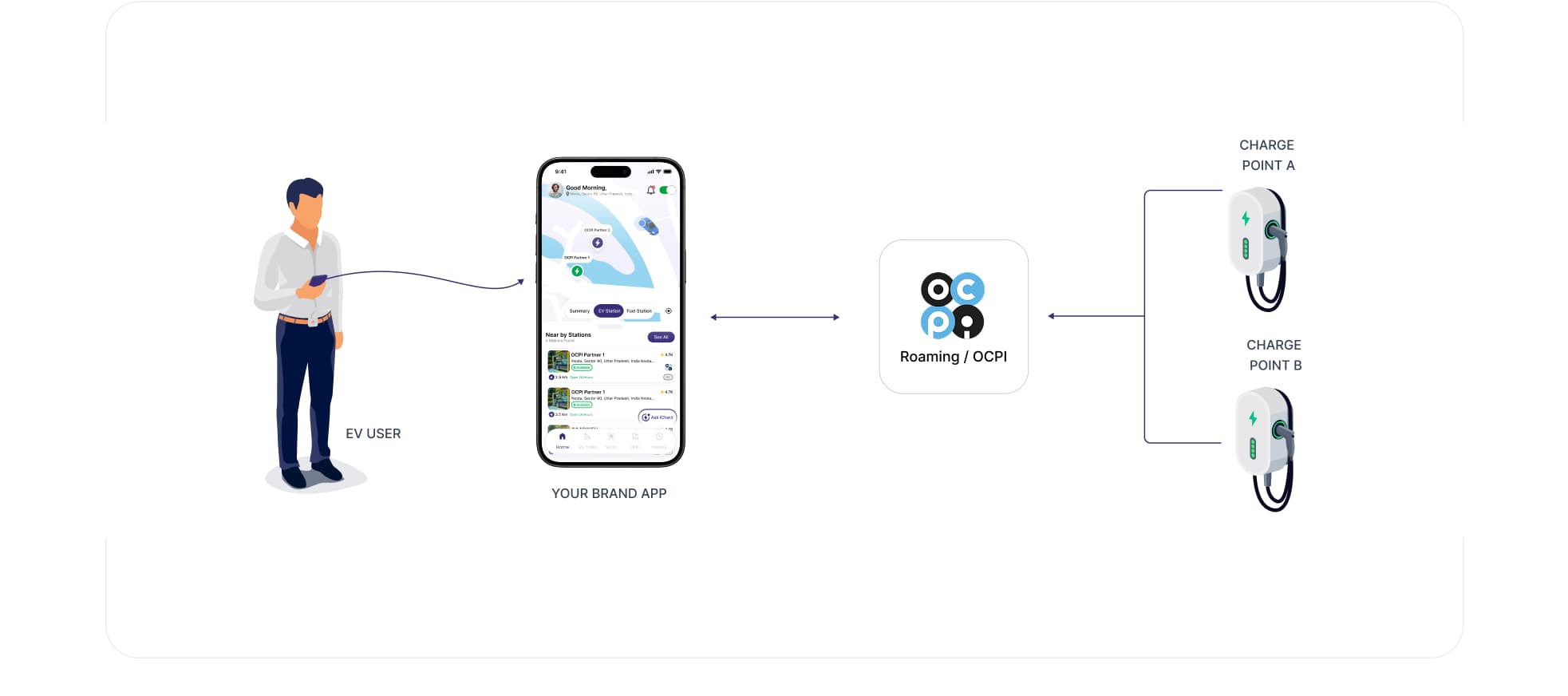
Every charging network has its own app
Drivers see fragmented networks. Your brand disappears when they need to charge somewhere else

Discovery
Where can the driver charge?

Access
Can the driver start a session through your app?

Experience
Why should the driver leave your brand to charge?

Settlement
How do charging transactions and roaming settlements flow across partners?
Put multiple charging networks inside your app
Connect the charging networks you enable through roaming and give drivers one branded experience for charger discovery, access and charging
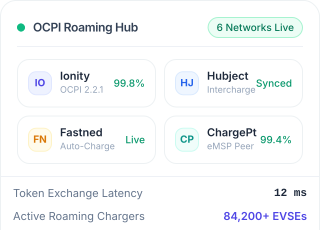
Roaming Access
Connect with supported charging networks and give drivers access through your app
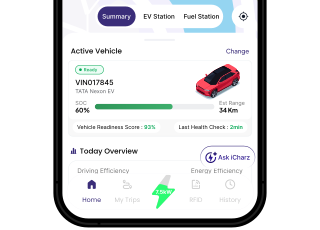
One Driver Experience
Let drivers discover chargers, view availability and start supported charging sessions without switching between multiple CPO apps
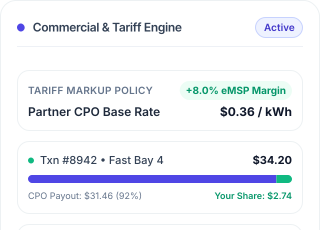
Your Commercial Layer
Present the charging experience under your brand and manage applicable tariffs, payment and transaction workflows according to your business model
Connect the charging networks you want to offer
Build your eMSP experience around roaming partnerships instead of forcing drivers to manage a separate app for every charging network
Book an iCharz DemoCPO Networks
Connect supported charging networks through roaming integrations
OCPI
Use supported OCPI capabilities to exchange charging-location, tariff, session and transaction information with roaming partners
Your branded app
Give drivers one place to discover and access the networks available through your eMSP service
Your customer relationship
Keep the driver experience under your own brand while charging may happen on another operator's infrastructure
Give drivers one charging experience
eMSP charging — FAQs
Answers about roaming, charging networks, branded apps, tariffs, payments and multi-network charging access
An eMSP, or e-Mobility Service Provider, provides drivers with access to EV charging services, often across multiple charging networks through roaming agreements.
Yes. Gaadin AI can provide a white-label driver experience that allows an eMSP or mobility brand to offer charging services under its own brand.
Yes. Through supported roaming integrations, an eMSP can make selected charging networks available through a single branded driver experience.
Gaadin AI supports OCPI-based roaming capabilities where supported by the deployment and partner requirements. If your current implementation is specifically OCPI 2.2.1, I recommend naming OCPI 2.2.1 explicitly here.
Yes. Supported roaming integrations can provide charging-location and availability information that can be surfaced through the driver experience.
Supported tariff and commercial workflows can be configured according to the eMSP business model, roaming relationships and deployment requirements.
Yes. The eMSP does not need to standardise the physical charging hardware across all roaming partners. The relevant requirement is compatibility with the supported roaming and integration interfaces.
Yes. Gaadin AI can support charging-network management and e-mobility service workflows, depending on the deployment architecture and required integrations.